
Training community health workers
At the beginning of 2013, we were awarded a research grant by Comic Relief to run a pilot programme to train 60 new Community Health Workers in the Mambolo Chiefdom of Kambia District to improve access to healthcare for women and children.
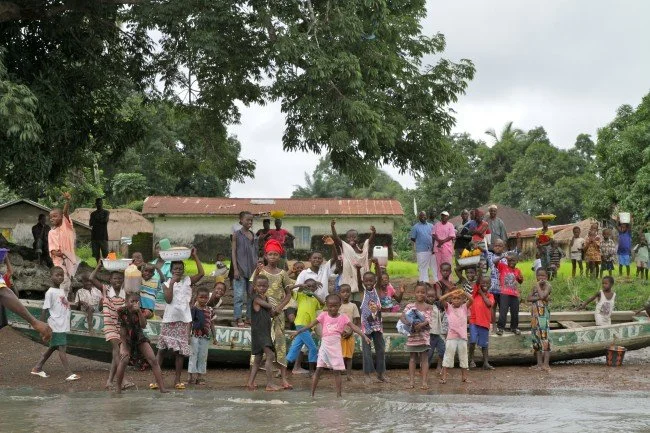
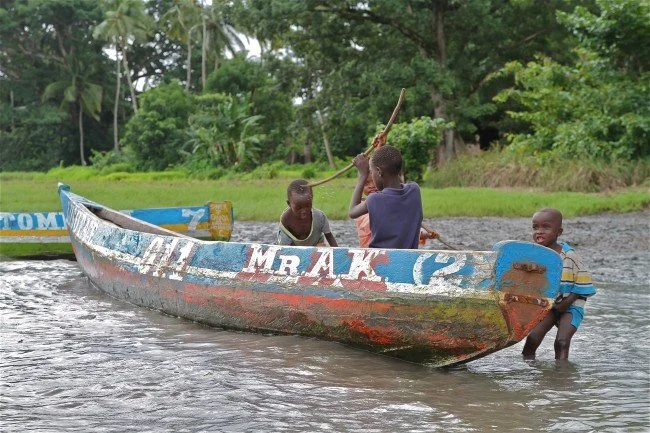
Mambolo is a coastal, riverine area, consisting of many small island communities living along networks of tidal rivers. It is therefore one of the most inacessible parts of Kambia District, due to fluctuating high tides and poor transport links. It is difficult for people to reach their local health centres and it is difficult for health staff to visit villages to run community outreach work to promote good health.
Training voluntary, community-based health workers should help to improve the health of the population by enabling more vulnerable women and children to benefit from basic healthcare. Community Health Workers will make house-to-house visits to assess the health of families and refer pregnant women and sick child for medical care.
Our project comprises the following elements:
Provision of training to local health centre staff and members of the Kambia DHMT to enable them to train new Community Health Workers across the Mambolo District.
Support was provided to the Kambia DHMT to identify and appoint 60 new Community Health Workers.
A specially written handbook and training manual were produced for Community Health Workers in Kambia.
Funding was provided for the 10-day training programme for Community Health Workers, as outlined by the Sierra Leone Ministry of Health policy and guidelines (July 2012).
Support was given for the day-to-day activity of the new Community Health Workers, including the provision of t-shirts, log books, mobile phone credit and transport, and funding for health promotions in villages and primary schools.
A chiefdom-wide survey of local community attitudes to and perceptions of the government health services was undertaken by the civil society group United For The Protection of Human Rights (UPHR).
The Community Health Workers were trained to promote personal and home hygiene and safe water management; to provide basic health advice for pregnant women and to promote antenatal care, care of the mother and newborn, breastfeeding and basic family planning, including birth spacing. They also learned to identify and encourage patients to seek professional care for the treatment of HIV/AIDS, TB, malaria, common childhood illnesses, pneumonia, diarrhoea and malnutrition. They also promoted childhood immunisations.
This was one of the first integrated Community Health Worker programmes of its kind in Sierra Leone, providing funding to a DHMT to implement the government’s new Community Health Worker policy (July 2012). Our project ran for six months until February 2014, and, as it proved successful, we used the project findings to apply for funding to roll out the programme across the Kambia District to provide over 1,300 new Community Health Workers.
Project Progress so far
In July 2013, we ran a one-week training course for the 11 Mambolo health staff who will be training the new Community Health Workers attached to their health centres. Participants included MCHAs, SECHNs and a CHO. The course was designed to improve teaching skills and was focused on the 14 core health topics outlined in the specially created handbook for Community Health Workers in Kambia.
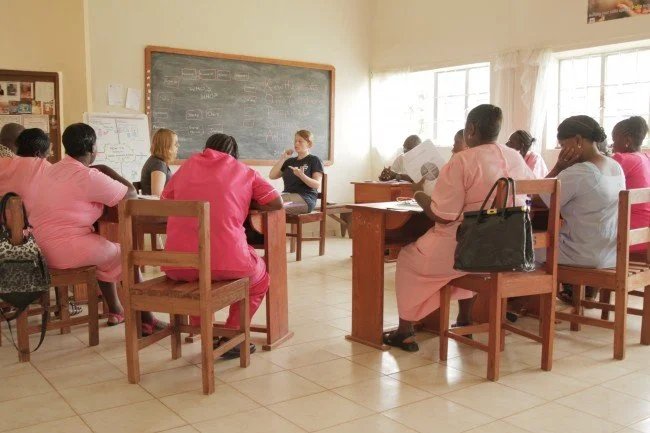
Dr Stacey Mearns and Dr Claire Thomas lead the “Train The Trainers” workshops
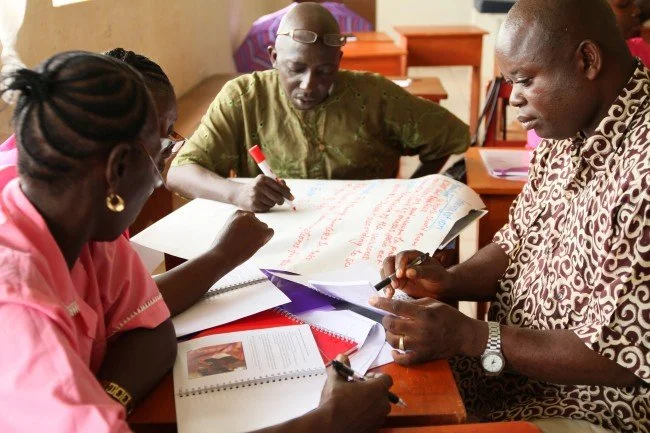
Small groups of participants prepare presentations on teaching topics from the Community Health Worker Handbook
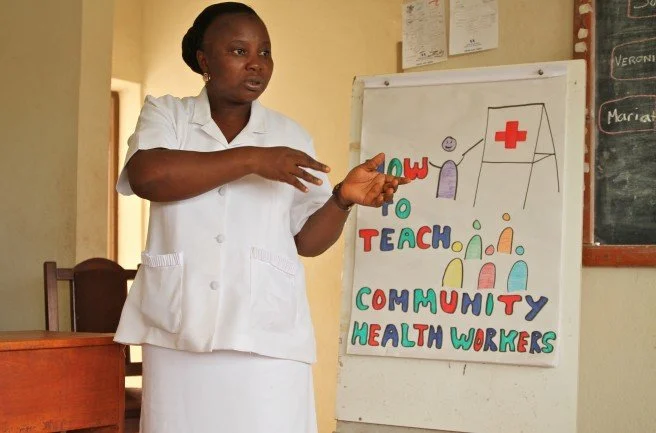
Hawa Kallon, the Senior District Health Sister in charge of primary health care in Kambia, addresses the trainees
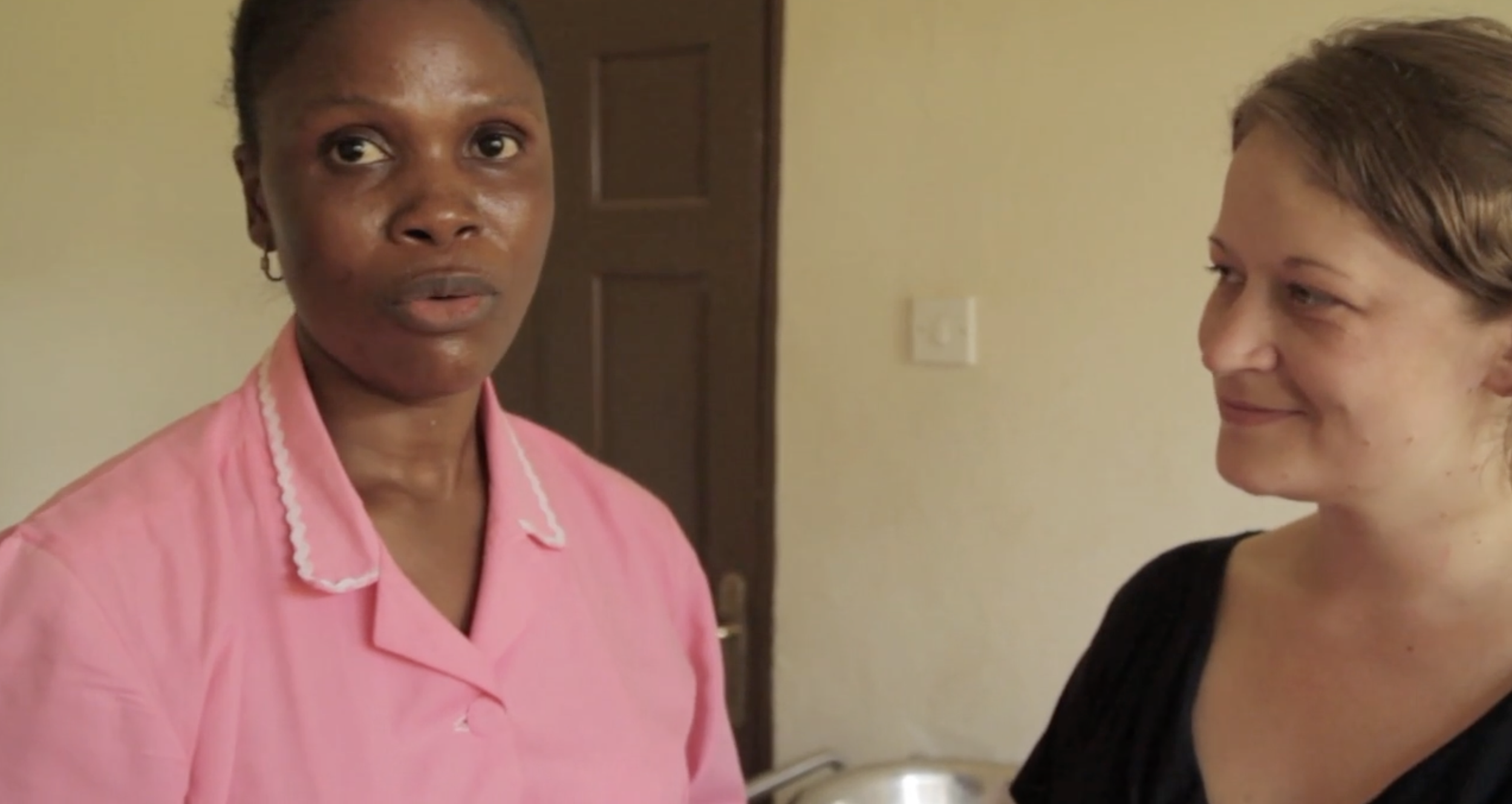
This is what Mariatu Kamara, one of the course participants had to say about the importance and achievements of the training week:
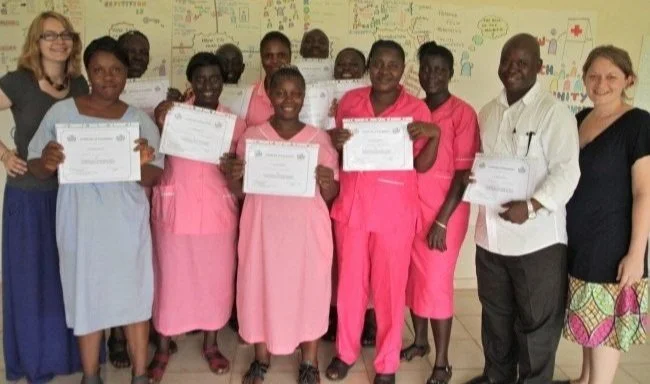
The 11 new Community Health Worker trainers from Mambolo with their certificates at the end of the training week at Kambia MCHA Training College
Mambolo Chiefdom
Mambolo Chiefdom is at the western edge of Kambia District on the Atlantic coast. It has a population of around 60,400 people, with 13,400 women of child bearing age, 2,658 pregnant women and 2,416 infants under one year old. It has 8 health centres at Mambolo Town, Rotainbana, Mayakie, Romando, Macoth, Rokel, Tombo Wallah and Kalainkay. Below are photos taken as we arrived at the small island of Tombo Wallah in July 2012 during our fact-finding mission in preparation for the funding application to Comic Relief.

This project is funded by a Research, Consultation and Planning grant under the Common Ground Initiative for Health from Comic Relief.